
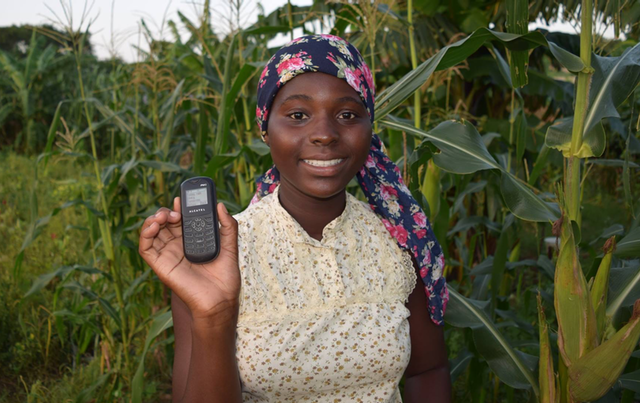
What is e-Agriculture Strategy?
An e-Agriculture strategy is using innovative digital technology solutions like precision agriculture, drones, big data, predictive analytics, and blockchain to improve social and economic outcomes for smallholder farmers.
e-Agriculture programs aim to increase food security by helping smallholder farmers improve modern ICT4Ag farming methods and access to markets. Agricultural ICT4D strategies encompass the full agricultural value chain and includes adjacent technologies like digital financial services and geographic information systems.
Communication in Agriculture
Smallholder farmers have limited knowledge, services, and technologies available to them. They typically need support to adopt modern farming methodologies.
Agriculture technology solutions focus on extension services for farmers to adopt new technologies and innovation. ICTs can amplify the efforts of the extension agents to help farmers plan what crops to grow, source inputs for crop cultivation, and selling their produce in local market.
Chatbots offer an exciting opportunity for governments to engage farmers on the social media platforms where farmers already congregate. For example:
- Facebook chatbots are a popular way to answer basic questions or help farmers apply for government support services.
- SMS text message chatbots can also help private sector companies develop new business leads and educate extension agents on their services.
ICT communication tools can play a crucial role in supporting farmers to access new inputs, credit, and markets with personalized and customized services.
Examples of e-Agriculture Programs
The potential to achieve high impact at the farm-level requires appropriate technology and adoption methodologies. International development organizations can use e-Agriculture communication programs like those below to support ICTforAg value chain ecosystems in developing countries.

Apply Now with AI: $240M for Agricultural Commodity School Feeding Programs
Globally, 273 million children are out of school, and the gap is widening fastest in the lowest-income countries, where 33 percent of school-aged children are out...

Apply Now: $65,000 for Global Food Insecurity AgriTech Startups
Acute food insecurity rose for the sixth consecutive year in 2024, with more than 295 million people across 53 countries experiencing hunger. At the same time,...

India’s Digital Agriculture Mission Must Close Social Capital Gaps
From the written word to the mobile phone, every major technology has reached people with strong social capital first. This is not a failure of the technology....
India Just Proved A Better Way to Build AgriTech Solutions
How many AgriTech solutions promise to revolutionize smallholder farming with comprehensive digital advisory platforms? The formula is always the same: aspirational...

Apply Now: $360,000 for AI4Good AgriTech Farmer Solutions
Traditional agriculture extension workers are overwhelmed. Advisor-to-farmer ratios exceed 1:1,000 across developing countries. Government extension systems are...

You Cannot Scale Digital Technology Services Without People
Is there a world where digital agriculture advisory services—or any technology—can scale without community-based agents? The collective answer by D4Ag group...

12 Reasons Why Farmers Do Not Use Mobile AgriTech Services
Researchers and practitioners who shape the digital transformation of smallholder agriculture need to better understand mobile phone-related behaviors and attitudes...

Apply Now: $1 Million for AI-Powered Agriculture Technology
The challenges facing agriculture and food systems in developing countries has never been more urgent. Smallholder farmers around the world need climate resilience,...

Unlocking Digital Inclusion for Food Security with Accelerators, Extenders, and Amplifiers
A little over a year ago, I oversaw the commissioning of an inclusive digital design toolkit focused on providing practical guidance for increasing digital inclusion...

Use ChatGPT Visual Skills to Improve USAID Nutrition Programs
Three years ago, I was asked to improve nutrition programming for a large USAID implementing partner. They were concerned about chronic malnutrition in target populations,...
About Us
ICTworks™ is the premier resource for international development professionals committed to utilizing new and emerging technologies to magnify the intent of communities to accelerate their social and economic development.
Subscribe to our Newsletter
Enter your e-mail to get ICTworks 3x a week!:
Become an ICTworks Writer
Our team gladly accepts outside contributors for ICTworks articles. If you would like to publish an article on our website, please see our Guest Post Guidelines
 This work is licensed under a Creative Commons Attribution-NonCommercial-ShareAlike 4.0 International License.