
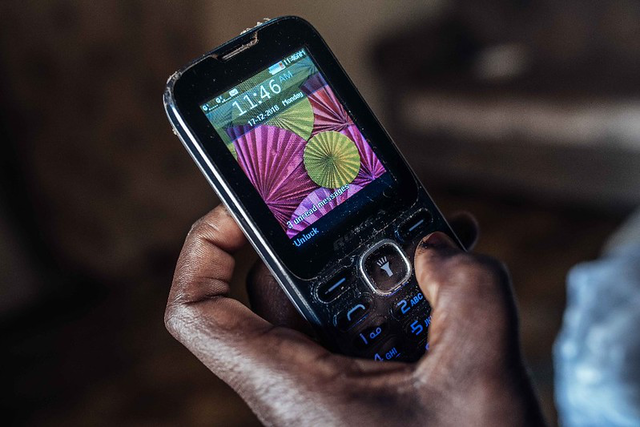
How can mobile phones help poor people?
Mobile phones can be used in ICT4D (Information and Communication Technologies for Development) to help poor people.
Mobile phones can be a powerful tool for promoting development and improving the lives of people in developing countries, by providing access to information, opportunities, and services. For example:
- Healthcare: Mobile phones can be used to access health information and services, including telemedicine and other remote healthcare services. This can help to improve access to healthcare, especially for people in remote or underserved areas.
- Education: Mobile phones can be used to access educational resources, including online courses, educational videos, and other materials. This can help to improve the quality of education and expand opportunities for learning.
- Employment: Mobile phones can be used to find and apply for jobs, as well as connect with potential employers and clients. They can also be used to start and run businesses, providing a source of income and economic opportunities.
- Communication: Mobile phones can be used to stay connected with friends and family, and to access news and information from around the world. They can also facilitate the exchange of ideas and facilitate collaboration with others.
- Political participation: Mobile phones can provide a platform for people to engage in political discourse and participate in the democratic process, helping to promote transparency and accountability in governance.

The Best Practices in the Use of ICTs in Development Are…
How are advances in communications technologies driving transformational change in development? United Methodist Communications recently published a discussion...

The Moral Dilemmas of E-Waste
E-waste is growing. Computers, phones and other electronic devices are increasingly being discarded, as StEP’s e-waste world map shows. Planned and perceived obsolescence...

Mobiles for Development Partnerships are Still Hard!
I am Kristen Roggemann, and at the recently-concluded GSMA Mobile for Development Summit, GSMA mWomen was thrilled to host a spirited discussion on the opportunities...

5 Reasons Why Public Access Matters in the Age of Private Mobile Devices
The mobile Internet is growing at an unprecedented rate. It is expected to be a matter
of time before mobile Internet use eclipses desktop use. What does this trend...

How to Use Mobile Phone Network Data for Better Development
The UN Global Pulse has published ‘Mobile Phone Network Data for Development’, a primer on how analysis of Call Detail Records (CDRs) can provide valuable information...

Tools of the Mobile-Enabled Disaster Responder
Responding after a natural disaster is one of the most challenging environments an ICT professional can find themselves in. Extreme weather, challenging logistics...

12 Considerations in Designing ICTs to Better Support Children
In both the developing and developed world there has been increasing debate about the role of teachers in the 21st century, particularly in the context of widening...

RSVP Now for Mobile Solutions Forum Asia 2014
What are the leading mobile innovations in Asia? Who are the thought leaders and decision makers? How can development practitioners leverage both the innovations...

Apply for $140,000 GSMA mWomen Innovation Fund Grants
The GSMA mWomen team is delighted to announce the launch of the fourth round of Innovation Fund grants. The goal of the NGO grants is to provide seed funding for...

IKEA is My Teacher for mEducation Application Development
I am Mike Dawson of Paiwastoon and I’ve spent 6 years working with Education Technology in Afghanistan. There is of course no shortage of challenges with...
About Us
ICTworks™ is the premier resource for international development professionals committed to utilizing new and emerging technologies to magnify the intent of communities to accelerate their social and economic development.
Subscribe to our Newsletter
Enter your e-mail to get ICTworks 3x a week!:
Become an ICTworks Writer
Our team gladly accepts outside contributors for ICTworks articles. If you would like to publish an article on our website, please see our Guest Post Guidelines
 This work is licensed under a Creative Commons Attribution-NonCommercial-ShareAlike 4.0 International License.