How can mobile phones help poor people?
Mobile phones can be used in ICT4D (Information and Communication Technologies for Development) to help poor people.
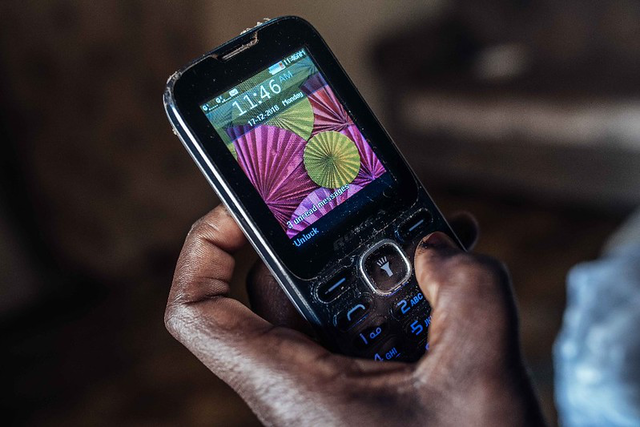
Mobile phones can be a powerful tool for promoting development and improving the lives of people in developing countries, by providing access to information, opportunities, and services. For example:
- Healthcare: Mobile phones can be used to access health information and services, including telemedicine and other remote healthcare services. This can help to improve access to healthcare, especially for people in remote or underserved areas.
- Education: Mobile phones can be used to access educational resources, including online courses, educational videos, and other materials. This can help to improve the quality of education and expand opportunities for learning.
- Employment: Mobile phones can be used to find and apply for jobs, as well as connect with potential employers and clients. They can also be used to start and run businesses, providing a source of income and economic opportunities.
- Communication: Mobile phones can be used to stay connected with friends and family, and to access news and information from around the world. They can also facilitate the exchange of ideas and facilitate collaboration with others.
- Political participation: Mobile phones can provide a platform for people to engage in political discourse and participate in the democratic process, helping to promote transparency and accountability in governance.

Reading on Mobile Phones? mLiteracy Opportunities and Challenges
Recently, the Goethe Institute of Johannesburg hosted an mLiteracy Networking Meeting to examine the opportunities and challenges for mobiles to increase literacy...

How Was mBanking Successfully Embraced in Bangladesh?
Bringing mBanking to Bangladesh has had many bumps along the road. Before introducing mBanking to Bangladesh, 87% of the population didn’t have a bank account...

The Technology Helping Cambodia’s Disconnected and Hardest to Reach
In a nation of about 15 million people, Cambodia has over 19 million mobile phone subscribers. In addition, there are only about 3.8 million Internet users. A 2014...

The One Thing Everyone Should Do Now to Improve Program M&E
There is a simple solution that is useful throughout the project cycle, takes 10 minutes to set up, is used by millions of organizations worldwide but seldom used...

Win $10,000 in USAID Mobiles for Development in Asia Award
Do you have a mobile service, product, app, or add-on that is being used to address a development challenge in Asia? Do you want the opportunity to promote your...

3 M4D Case Studies from GSMA Mobile for Development Impact
We so often hear that people want more case studies of M4D services that, have scaled to reach wider audiences, or are showcasing new innovative approaches. GSMA’s...

Hey ICT4D, It Is Time We Take Fun Seriously
Five million mobile value-added service subscribers in three months. 25,000 hours of user engagement daily. All in remote villages in Bihar, one of the most marginalized...

KYC: The Secret to Successful Negotiations with Mobile Network Operators
NGOs and social service organizations are increasingly turning to mobile technology as a tool for designing and delivering services to the poor, whether in health,...

Can ICTs Improve Democracy and Governance in Myanmar?
Internet access, in particular via mobile technology, gives citizens a medium through which to exercise their political voice. It can be used to challenge preexisting...

The Future of Myanmar is Mobile Phones
Today, Myanmar has the same mobile phone usage as North Korea, Eritrea, and Cuba – less than 10% – yet technology restrictions are ending, three mobile operators...
About Us
ICTworks™ is the premier resource for international development professionals committed to utilizing new and emerging technologies to magnify the intent of communities to accelerate their social and economic development.
Subscribe to our Newsletter
Enter your e-mail to get ICTworks 3x a week!:
Become an ICTworks Writer
Our team gladly accepts outside contributors for ICTworks articles. If you would like to publish an article on our website, please see our Guest Post Guidelines
 This work is licensed under a Creative Commons Attribution-NonCommercial-ShareAlike 4.0 International License.