How can mobile phones help poor people?
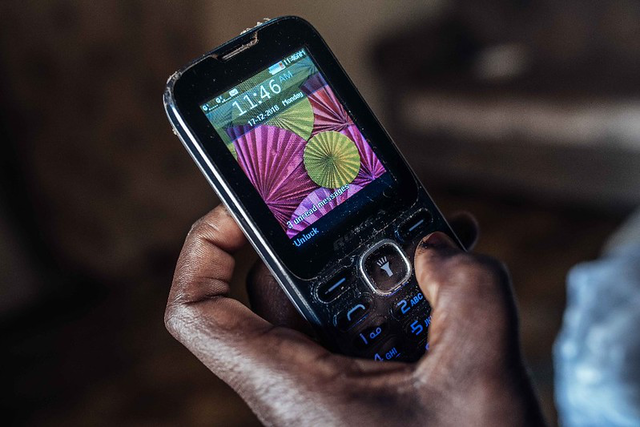
Mobile phones can be used in ICT4D (Information and Communication Technologies for Development) to help poor people.
Mobile phones can be a powerful tool for promoting development and improving the lives of people in developing countries, by providing access to information, opportunities, and services. For example:
- Healthcare: Mobile phones can be used to access health information and services, including telemedicine and other remote healthcare services. This can help to improve access to healthcare, especially for people in remote or underserved areas.
- Education: Mobile phones can be used to access educational resources, including online courses, educational videos, and other materials. This can help to improve the quality of education and expand opportunities for learning.
- Employment: Mobile phones can be used to find and apply for jobs, as well as connect with potential employers and clients. They can also be used to start and run businesses, providing a source of income and economic opportunities.
- Communication: Mobile phones can be used to stay connected with friends and family, and to access news and information from around the world. They can also facilitate the exchange of ideas and facilitate collaboration with others.
- Political participation: Mobile phones can provide a platform for people to engage in political discourse and participate in the democratic process, helping to promote transparency and accountability in governance.

The Top Books Read by Youth on Mobile Devices
At Worldreader, we love using data to help our readers find books they not only want to open but love to read. That’s why this year, when thinking about our...

Stop Giving Away Smartphones!
Pretty much every day, I hear the same failure refrain repeated again and again, “We gave away 50-100 smartphones for our mobile project.” Why is this...

5 Takeaways from UNESCO’s 2016 Mobile Learning Week
The 2016 UNESCO Mobile Learning Week kicked off last Monday with a webinar entitled Innovation and quality: Two sides of the same coin? The virtual event, held...

7 Tips for Better Digital M&E in Sustainable Development
With the landmark UN Sustainable Development Summit over, the discussion is now shifting to the question of how to operationalize the 17 ambitious goals in the...

What Are Dell, Micromax Informatics, and Others Doing in ICT4D?
While the rapid development of information and other technologies has brought the world closer together, it has also contributed to highlighting some of the glaring...

Top 5 Considerations for Choosing a Mobile Data Collection Tool
With the recent announcement of the UN’s Sustainable Development Goals for the next fifteen years, it’s clear that there will be more intense scrutiny on organizations...

Why M&E Is LAME (Or Should Be…)
M&E is lame… As is MEL, MERL, MEAL, PME, and PM&E.
Why do we do M&E? To improve our work surely; but how do we improve? By learning what works,...

Wow! Myanmar is Going Straight to Smartphones
A year ago, I predicted that Myanmar would be a smartphone only country. I saw the confluence of cheap smartphones, savvy people, and innovative mobile network...

Are Smartphones Making SMS Projects Obsolete?
Are SMS projects still relevant? Are toll-free phone numbers still needed? As more and more people in developing countries have access to cheap smartphones and...

10 Myths About Girls’ Empowerment and Mobile Learning
I had the chance to share some thoughts at UNESCO’s recent Mobile Learning Week. My presentation explored some myths about girls empowerment and mobile learning...
About Us
ICTworks™ is the premier resource for international development professionals committed to utilizing new and emerging technologies to magnify the intent of communities to accelerate their social and economic development.
Subscribe to our Newsletter
Enter your e-mail to get ICTworks 3x a week!:
Become an ICTworks Writer
Our team gladly accepts outside contributors for ICTworks articles. If you would like to publish an article on our website, please see our Guest Post Guidelines
 This work is licensed under a Creative Commons Attribution-NonCommercial-ShareAlike 4.0 International License.