
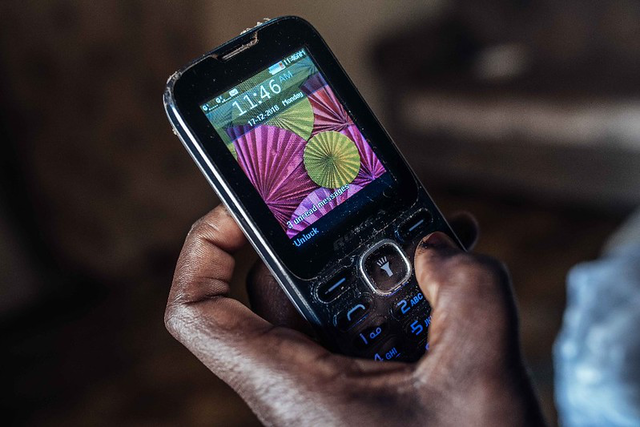
How can mobile phones help poor people?
Mobile phones can be used in ICT4D (Information and Communication Technologies for Development) to help poor people.
Mobile phones can be a powerful tool for promoting development and improving the lives of people in developing countries, by providing access to information, opportunities, and services. For example:
- Healthcare: Mobile phones can be used to access health information and services, including telemedicine and other remote healthcare services. This can help to improve access to healthcare, especially for people in remote or underserved areas.
- Education: Mobile phones can be used to access educational resources, including online courses, educational videos, and other materials. This can help to improve the quality of education and expand opportunities for learning.
- Employment: Mobile phones can be used to find and apply for jobs, as well as connect with potential employers and clients. They can also be used to start and run businesses, providing a source of income and economic opportunities.
- Communication: Mobile phones can be used to stay connected with friends and family, and to access news and information from around the world. They can also facilitate the exchange of ideas and facilitate collaboration with others.
- Political participation: Mobile phones can provide a platform for people to engage in political discourse and participate in the democratic process, helping to promote transparency and accountability in governance.

Technology gets rid of dictators, but not social classes
Since the Arab Spring uprisings, human rights activists worldwide have championed the power of technology, mainly the Internet and mobile phones, as tools for democracy...
Are inexpensive smartphones the future of ICT4D?
I am Andrew J. Dupree, and nine months ago, I found myself in the same state as many other nights in my life as a computer engineering student – staring at my...
Four Obvious Yet Completely Wrong Assumptions About Technology Use in the Developing World
I am Patrick Meier and I’ve spent the past week at the iLab in Liberia and got what I came for: an updated reality check on the limitations of technology adoption...
Gender Assessment of ICT Access and Usage in Africa
Information Communication Technologies (ICTs) are widely seen as having the potential to contribute positively to economic growth and development and to improve...
ReelHealth: Storytelling with Mobile Video for Impact
You don’t have to be a professional filmmaker to tell a powerful story, and you don’t need bulky, expensive equipment. With 5 billion cell phone subscriptions...
Geuza: Build your Swahili vocabulary and fluency on a mobile phone
Geuza was a winner at the Samsung Kenya Apps Contest last year, and I can see why: its a hot language learning tool designed for mobile phones. A real Kenyan mLearning...
What the Nokia-Microsoft Deal Means for Nigerian Software Developers
It is no longer news that Nokia’s market share has been suffering. Even the company’s CEO once said that Nokia is failing to compete and losing ground to competitors...
mLearning: A Platform for Educational Opportunities at the Base of the Pyramid
Education is a key investment in human capital: no variable from 1900 better explains economic success in 2000 than investment in education. Yet today 69 million...
USAID Lessons Learned in Using Mobile Money to Enhance Agriculture Development
Where agriculture development projects find access to financial services a key constraint to success, m-money and m-banking services are potentially important tools...

5 Ways ICT Can Support the Millennium Development Goals
I’ve been putting together my thoughts around girls, child rights, information and communication technologies and the Millennium Development Goals. The angle...
About Us
ICTworks™ is the premier resource for international development professionals committed to utilizing new and emerging technologies to magnify the intent of communities to accelerate their social and economic development.
Subscribe to our Newsletter
Enter your e-mail to get ICTworks 3x a week!:
Become an ICTworks Writer
Our team gladly accepts outside contributors for ICTworks articles. If you would like to publish an article on our website, please see our Guest Post Guidelines
 This work is licensed under a Creative Commons Attribution-NonCommercial-ShareAlike 4.0 International License.