
ICT4D
You Need an iPad (not Tablet) Strategy in 2012

Recently, Apple released its 4th quarter earnings, and the numbers were stunning. Macrumors spells out the highlights of what is now the most valuable public company on earth:
Apple shipped 5.2 million Macintosh computers during the quarter, a unit increase of 26 percent over the year-ago quarter. Quarterly iPhone unit sales reached 37.04 million, up 128 percent from the year-ago quarter... Apple also sold 15.43 million iPads during the quarter, up 111 percent over the year-ago quarter. Apple set new company records for iPhone, iPad, and Mac sales during the quarter.
But all those numbers are pretty abstract. Can you even fathom a company where:
- The iTunes Store alone generated 50 percent more revenue than all of Yahoo did last quarter
- Apple's profit for the year beats Google’s total revenue for the year
- Apple's quarterly revenues are over double Microsoft's quarterly revenues
I have a pretty good imagination, and I am still trying to comprehend what all that means. But there is one small metric that is no dream. Its a metric that should have every IT company concerned too:
Apple sold more iPads alone than HP sold PC's
Oh, and iPads are only 20% of Apple's overall revenue stream. Which means that every IT company in America, Africa, and around the world will need to have an iPad strategy in 2012. No more is the PC - desktop or laptop - the center of the computing experience. The iPhone (and to a lesser extent) Android own the mobile phone space and the iPad is now cannibalizing the PC market as people find the sleek aluminum and glass tablet more convenient and powerful than many computers.
iPads are in Africa already
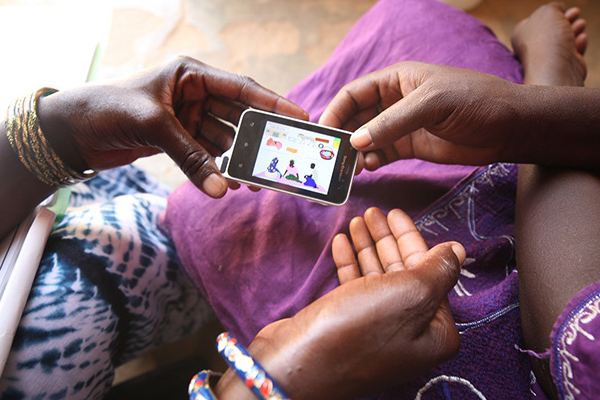
I can hear a few people in the ICT4D space saying "so what?" They believe that iPads are not Bottom of the Pyramid products. To an extent, they are right - most Africans are not buying iPads as consumer items, like is done in wealthy countries. Yet, iPads are here, and cheaper than in Europe.
IDG reports that IT and business professionals in Africa are twice as likely (47%) to use an iPad purchased by their employer than their colleagues elsewhere in the world (23%), and possibly as a result, iPad users in Africa tended to use their devices more for business than entertainment and their levels of work-based communication using an iPad were higher than average.
But what should be noticed is that levels of hardware substitution in Africa are very close to the global norm. 73% said their iPad had partly or completely replaced their laptop. That means desktop and laptop vendors need to develop an iPad strategy now.
Not a tablet strategy, mind you, but an iPad strategy. So far, its the only tablet that matters as IDG found "incredible" brand loyalty to Apple - only 19% of those surveyed in Africa would consider purchasing a non-Apple tablet. And iPad users are popping everywhere, even in rural agriculture.
Question is: what does an iPad strategy look like?
This is an open question. I've explored the iPad's impact on education, but as to an iPad sales strategy, I'm still a bit lost. I do know we all need to find one asap. Or we will all be working in a Genius Bar before we know it.
Wayan Vota
InveneoWayan Vota is a technology expert focused on appropriate information and communication technologies (ICT) for rural and underserved areas of the developing world. He is a Senior Director at Inveneo and is the editor of ICTworks
Get an ICT4D Job! Interesting Opportunities in Switzerland, Jordan, Kenya, and United States

Medair International provides emergency relief and rehabilitation to the most vulnerable and difficult-to-reach regions in Africa and Asia in natural disasters, conflict areas, and other extraordinary crises. Medair HQ in Lausanne, Switzerland is seeking an ICT Specialist to help provide operational guidance for country programs and activities, along with technical support for relief workers in the field. The ideal candidate should have a strong IT background in order to provide technical support to HQ staff and country program activities, as well as experience in international relief work and a strong Christian identity.
Eligibility is limited to Swiss or EU citizens, or those with a valid work permit. Deadline is January 31. See here for more information.

The International Executive Service Corps is a Washington, DC-based not-for-profit with a focus on private sector growth. IESC is recruiting for an experienced Jordanian or Jordanian-American ICT Venture Capital Specialist for the anticipated USAID Jordan Competitiveness Program. IESC is a subcontractor, responsible for the Access to Finance component of the program, to a large prime contractor that is submitting a proposal to USAID Jordan. The ICT position will likely be based in Irbid, Jordan.
The individual in this position will be responsible for venture capital financing with an emphasis on the ICT sector, and will set up effective angel networks. Deadline is January 27. More details here.

UNDP’s OCHA is looking for an ICT Associate to be based in Nairobi, Kenya, who would implement ICT systems and strategies, provide daily technical support to users of information management tools and technology infrastructure, including provision of daily technical support to OCHA Somalia systems, network infrastructure and corporate productivity tools, and support and training of business applications and new technologies.
The candidate should have a strong background in IT in order to provide helpdesk services as well as experience in ICT for development. Deadline is January 27. More details here.

Aquaya, based in San Francisco, is dedicated to improving global child health by increasing access to safe drinking water. Aquaya believes that innovative ICT systems have the potential to improve the efficiency and accuracy of data reporting and management in the water sector and to strengthen institutional linkages between field staff and their managers at various administrative levels.
The organization is seeking an ICT Program Associate to manage the technical aspects of its field deployments in South America, Africa, and Asia and to expand its ICT project portfolio. More information about this unique opportunity here.
Sabina Behague
International development professional (and mom), living in DC metro area. I am focused on ICT and education, with mad writing and editing skills, proposal development acumen, and Latin America and Africa experience.
Which University Department Should Have ICT4D Studies?
Information and Communication Technology for Development (ICTD) research brings together a community researchers from such varied fields as computer science, cognitive and social psychology, design, anthropology, development theory, economics and public policy.
That ICTD is inherently interdisciplinary nature is its main weakness in the academic world, as interdisciplinarity is viewed suspiciously by academic disciplines that believe they are pursuing "pure" research in a well-circumscribed field. Therefore it is important to decide which university department is best suited to leverage the entire resources of the university to impart ICTD education.
This decision may seem insignificant, but it also has important consequences in the broader context, for e.g. limiting ICTD research to a particular department may limit the amount of funding available for such research, it may limit the category of journals and conferences this research can be published in, and it may limit the number and discipline of researchers interested in conducting such research.
But these problems are associated with any interdisciplinary field, and as the field grows and has its own tier 1 conferences and reputed journals, these problems become easier to resolve.
I am Mustafa Naseem and in ICTD Education in Traditional Universities, I highlight a few challenges of ICTD research in the academic world and then list a few current ICTD teaching practices in global universities. From there I analyze the strengths and issues associated with hosting ICTD programs in a few traditional departments, moving on to outlining the content that should be taught in undergraduate ICTD courses versus graduate ICTD courses.
Guest Writer
This Guest Post is a ICTworks community knowledge-sharing effort. We actively search for and re-publish quality ICT-related posts we find online. Please follow the link above to read the original article. If you'd like to suggest a post (even your own), please email wayan at inveneo dot org
The Bi-Weekly Retrospective: Important Links for January 3-17, 2012

Educational Technology: So much talk these days about educational technology in the developing world and whether it’s really an efficient tool for improving education or just another techie fad. Don’t miss TechChange’s next online course, "New Technologies for Educational Practice," offered February 20 – March 16. Early bird deadline is February 1, regular deadline is February 20.
The Heavy Hitters Weigh In: The Brookings Institution and UNESCO have taken an active role in the ongoing debate about ICTs and education. A New Face of Education: Bringing Technology into the Classroom in the Developing World is an in-depth study that looks at all levels of education in the poorest countries of the world, from Sub-Saharan Africa to South and West Asia to the Caribbean, and comes up with some encouraging conclusions . Transforming Education: The Power of ICT Policies looks at a number of countries and their competencies, motivation, and teachers’ working environment, and offers insights and guidance to help policy-makers integrate ICTs in education more effectively.
Become an ICT4D Champion: The University of Manchester’s Centre for Development Informatics is offering several world-class graduate programs in ICT4D at the Master’s and Doctoral level. The Centre has a particular interest in candidates working in areas such as mobile finance, micro-enterprise, gender issues, and e-government and civil society, among others. Learn more here about this fantastic opportunity.
Business Fighting Poverty: *iHub, the tech leader in open space innovation and development in Kenya, is hosting IEEE Webinar: Leveraging ICT Business Models to Help Reduce Poverty, which promises to provide insights on how ICTs can provide access to education, healthcare, agro-services, and financial services to the BoP. January 26, 10-11 EST
Are You an African Developer? The funding is out there for your startup, you just need the right ideas and the know-how to sell them. Affrinovator tells you how
African Internet Progress: If you’re interested in ICT4D in Africa, it’s important to keep up with the development of the Internet across the continent. Some thoughts from oAfrica.com
Using Mobiles for Effective ICT in Kyrgyzstan: FrontlineSMS and IREX work together to improve communication with teachers far and wide. In this case texting proves better than email.
To get these links faster, follow me on Twitter: @SabinaBehague
Sabina Behague
International development professional (and mom), living in DC metro area. I am focused on ICT and education, with mad writing and editing skills, proposal development acumen, and Latin America and Africa experience.
Top Ten ICT4D Conferences for 2012
Tony Roberts has compiled a handy list of ICT4D conferences this year for you to start putting on your calendar. Which of these do you plan on attending?
- Feb 28-29th, New Dehli, India: Mobiles for Development
- Mar 12-15th, Atlanta, USA: ICTD 2012 - preceded on Mar 10-11th by co-located ACM DEV
- Mar 19-23rd, Abuja, Nigeria: Idlelo5 – Free & Open Source Africa
- Mar 21-24, Kampala, Uganda: ICT for Africa – eInclusion
- May 14-18th, Geneva, Switzerland: WSIS Forum 2012
- May 23-25th, Cotonou, Benin: e-Learning Africa
- May 29-31st, Lausanne, Switzerland: Tech4Dev 2012
- May 29th-Jun 1st, Cape Town, South Africa: Mobile Health Summit
- Sep 5-6th, Kristiansand, Norway: IPID 2012 ICT4D Symposium
- Nov 13-15th Kathmandu, Nepal: 6th ICT for Development & Education Conference
And Tony has a great reminder for event organizers:
If you are still planning your event then perhaps consider either avoiding the second half of March and May or maybe piggy-back on someone else’s event - by scheduling in the same town on the days immediately preceding of following an existing event - so that we can reduce the environmental and financial costs of attending international conferences.
I'll second that request with one of my own: please make sure your attendees know and use the same Twitter hashtag so we call all follow along. I would suggest #ICT4D as a start.
Wayan Vota
InveneoWayan Vota is a technology expert focused on appropriate information and communication technologies (ICT) for rural and underserved areas of the developing world. He is a Senior Director at Inveneo and is the editor of ICTworks


A student at jkuat i need a laptop what are my chances? kindly respond
regards
I absolutely concur with papaedu, What else could have brought us this far? we need to embrace the concept bearing in mind we have great...
Very cool post, Lindsay. Here in Haiti, some teachers and principals seem to want computers just for the sake of having them. There's a...
Computers, if they can be supplied and teachers know what to do with them, should not be a waste of money poured down the drain for...
To reach pastures green and still waters calls for leaders who can see beyond the confines of a desert.a good business person should be...